
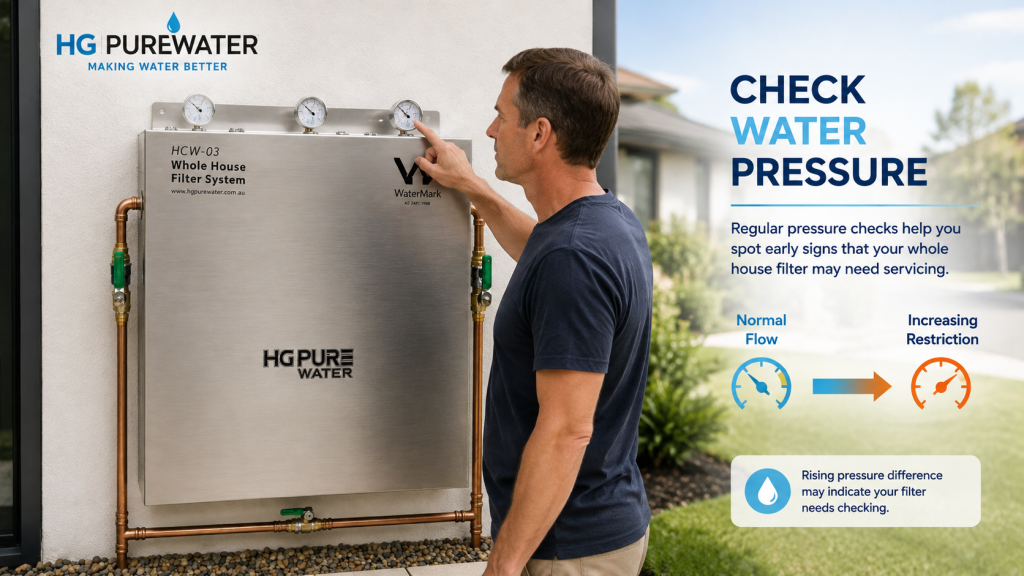
A water filter does not always stop working suddenly. In many cases, changes appear gradually as sediment accumulates or the treatment media approaches the end of its intended service period.
However, low pressure, unusual taste or cloudy water can also have causes unrelated to the filter. The following signs should prompt an inspection rather than an automatic assumption that every cartridge has failed.
Reduced Water Flow
A noticeable reduction in flow can occur when a sediment cartridge becomes loaded with captured particles.
For a whole-house system, compare several outlets. If flow has decreased throughout the property, the filter system may be one possible cause. If only one tap is affected, first check its aerator, valve or local plumbing.
Properties with pressure gauges should compare current readings with the readings recorded after the last cartridge change. A growing pressure difference across a filtration stage can help a plumber or supplier identify a possible restriction.
Do not remove cartridges simply to restore flow. Doing so may bypass an intended treatment stage.
Taste or Odour Has Returned
Activated-carbon filters are commonly selected to address specific taste and odour concerns. If a previously controlled issue returns, the carbon cartridge may require attention.
Taste and smell are useful observations, but they cannot confirm whether water is safe or whether a particular contaminant is present. Many contaminants have no obvious taste, smell or appearance.
The CDC advises consumers to select and maintain filters according to the contaminants of concern and the manufacturer’s instructions.
https://www.cdc.gov/drinking-water/prevention/about-choosing-home-water-filters.html
Visible Sediment or Unexpected Colour
Particles in filtered water may indicate that a sediment cartridge is overloaded, incorrectly installed or damaged. They may also originate from plumbing, a hot-water system or temporary work on the water network.
If the colour or appearance of the incoming water changes suddenly, check for notices from the local water provider. Do not assume that changing the filter alone will resolve an event affecting the source water.
For private supplies such as tank or bore water, unexpected changes may justify water testing and a review of the full treatment process.
The Scheduled Service Date Has Passed
A filter may still produce apparently normal-looking water after its recommended service date. That does not prove that the treatment media retains its intended performance.
Check the installation date and the instructions for the exact cartridge. If there is no maintenance record, identify the filter model before purchasing replacements.
NSF notes that replacement filters should be changed according to the interval specified by the manufacturer.
https://www.nsf.org/consumer-resources/articles/changing-water-filters
Leaks Around the Filter Housing
Water around a filter housing requires prompt attention. Possible causes include an incorrectly seated O-ring, damaged seal, loose housing, cracked component or excessive pressure.
A leak does not necessarily mean that the cartridge itself has expired. Isolate the water where safe to do so and arrange inspection. Do not continue tightening a housing without checking the manufacturer’s procedure, as overtightening can damage components.
A Warning Light or Indicator Has Activated
Some drinking-water and reverse-osmosis systems use timers, flow counters or electronic reminders. These indicators should not be ignored, but it is important to understand what they measure.
A timer may only count elapsed time rather than actual filter condition. Reset it only after the specified maintenance has been completed.
When to Seek Professional Help
Contact the supplier or a licensed plumber if there is a leak, sudden whole-house pressure loss, persistent discolouration or uncertainty about the correct cartridge.
For HG PureWater Filtration systems,contact and provide the model, photos of the installation, the cartridge-change date and a description of the issue. This makes diagnosis faster and reduces the risk of ordering an incompatible part.