
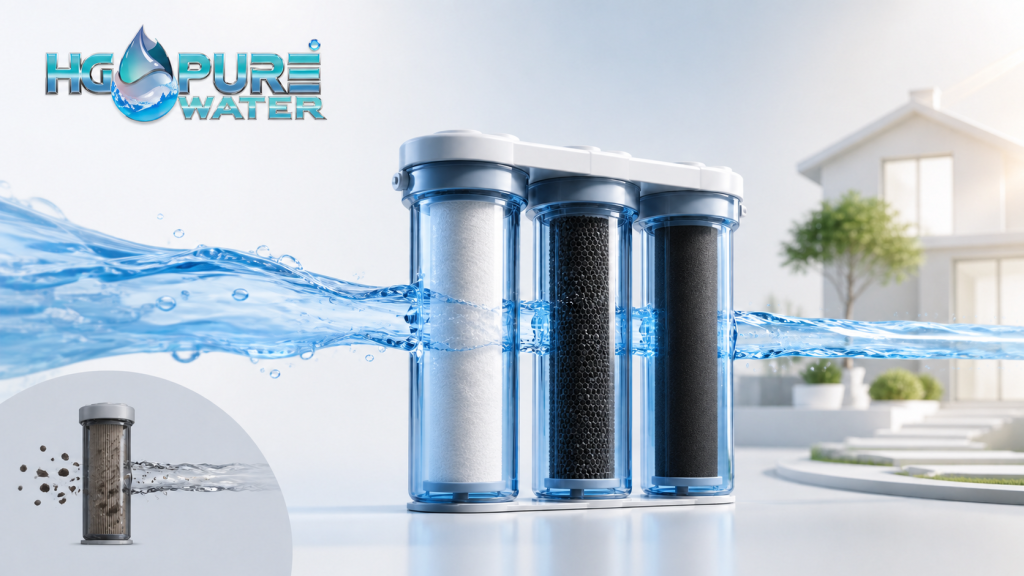
A whole-house water filter creates some resistance as water passes through its housings and filtration media. That does not mean a correctly selected and maintained system should automatically produce weak showers or poor household flow. Noticeable pressure or flow problems are more likely when the system is undersized, incoming conditions are unsuitable, several outlets are used at once, or a cartridge has become restricted.
Understanding the difference between pressure and flow helps when assessing a system before installation or diagnosing a change afterwards.
Pressure and Flow Are Related but Different
Water pressure is the force available within the supply. Flow rate is the volume of water delivered over time. A property can have acceptable static pressure when no fixtures are running but still experience inadequate flow when showers, taps and appliances operate together.
Every component in the plumbing path creates resistance, including pipework, valves, bends and filtration media. The practical question is whether the complete installation can support the household’s peak demand without an unacceptable drop at connected outlets.
System Sizing Matters
A whole-house filter treats water before it is distributed through the home. It may need to supply multiple bathrooms, the kitchen and laundry at the same time, so it must be selected differently from a small drinking-water filter.
Important factors include:
- incoming water pressure and available flow;
- pipe diameter and plumbing layout;
- number of occupants and bathrooms;
- fixtures likely to operate simultaneously;
- cartridge type and filtration rating; and
- the system’s rated operating flow.
HG PureWater lists an operating flow of 50–60 litres per minute for the HGW-03, subject to correct installation and site conditions. This specification should not be interpreted as a guarantee that every property will receive the same flow. The incoming supply and downstream plumbing remain part of the result.
Why Cartridge Condition Affects Flow
The first-stage sediment cartridge captures suspended material. As material accumulates, resistance across the cartridge can increase. A property with more sediment, ageing pipework or recent water-main disturbance may load a cartridge faster than a property with relatively clear incoming water.
Look for a Change From the Normal Baseline
A gradual reduction across several outlets can be a maintenance signal, especially when the system previously delivered normal flow. The HGW-03 includes pressure gauges that can help establish normal operating readings and identify changes across the filtration stages.
Do not assume every low-pressure complaint is caused by the filter. Supply interruptions, pressure-control valves, partially closed isolation valves, leaks, blocked aerators and other plumbing issues can produce similar symptoms.
What to Check Before Installation
Ask the installer to consider peak household demand, not only whether the unit physically fits. Provide the postcode, household size, number of bathrooms and any existing low-pressure concerns. Clear photos of the water meter, main entry pipe and proposed installation wall can also help identify access and pipework requirements.
Products connected to household plumbing should be installed according to applicable Australian requirements and manufacturer instructions. Where licensing is required, use an appropriately licensed plumber. Incorrect connections, unsuitable pipe sizing or unnecessary restrictions can affect performance even when the filtration equipment itself is correctly sized.
What to Do if Flow Drops After Installation
First establish whether the change affects one outlet or the entire property. A single slow tap may indicate a local fixture issue; lower flow at several outlets may justify checking the main supply and whole-house system.
Record the installation date, last cartridge change and any recent water works. Check the system’s gauges against its normal readings if available, but do not open pressurised housings unless you are authorised and understand the correct isolation procedure.
Contact HG PureWater or a licensed plumber if the reduction is sudden, severe, associated with a leak or cannot be explained by scheduled cartridge replacement. Send photos, gauge readings and a description of when the problem occurs. This evidence can help distinguish routine maintenance from a supply, installation or plumbing issue.